
Estate planning is not something you should create once and forget about. A will, power of attorney, beneficiary designation, or trust may accurately reflect your wishes when it is prepared, but life can change significantly over the years. Marriage, divorce, the birth of a child, a new home, retirement, business ownership, or the loss of a loved one can all create reasons to review your estate plan.
For families in Corpus Christi and throughout South Texas, regular estate plan reviews can be particularly valuable because property ownership, family circumstances, businesses, and financial assets can change over time. Nueces County alone has an estimated population of more than 350,000 people, representing families and individuals with a wide range of financial and estate planning needs.
So, when should you update your estate plan? The answer is whenever an important change occurs that could affect who receives your property, who manages your affairs, or who makes decisions for you if you become unable to do so.

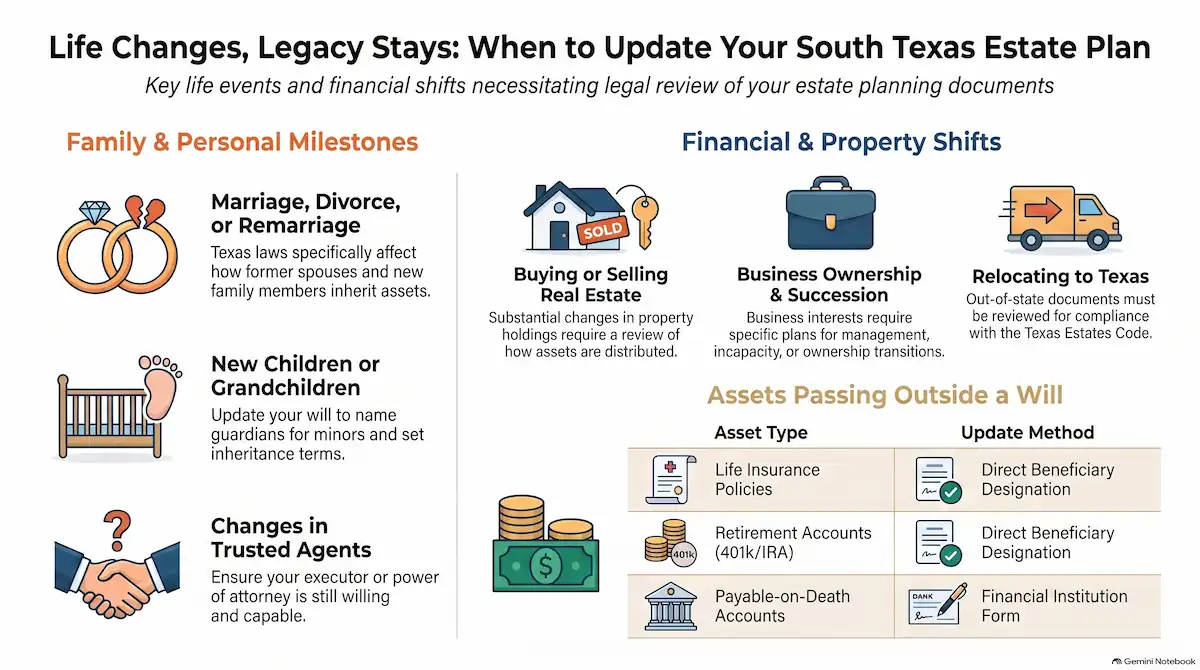
Review Your Estate Plan After Marriage or Divorce
Marriage is one of the clearest reasons to revisit an estate plan. If your will was created before you were married, it may not reflect how you now want your assets handled. You may also need to review beneficiary designations on retirement accounts, life insurance policies, investment accounts, and other financial assets.
Divorce is equally important. A previous estate plan may identify a former spouse as a beneficiary, executor, trustee, or agent under a power of attorney. Texas Bar guidance specifically notes that divorce can affect wills, insurance policies, retirement accounts, and other beneficiary arrangements.
Remarriage can make estate planning even more complicated, particularly when either spouse has children from a previous relationship. In those situations, updating the estate plan can help clarify how property should be divided between a spouse, children, and other beneficiaries.
A New Child or Grandchild Can Change Your Estate Plan
Growing families are another major reason to update estate planning documents. If you recently welcomed a child or grandchild, review your will and consider whether your current plan provides for them appropriately.
Parents of minor children should pay particular attention to guardianship provisions. A will can identify a person you would want to serve as guardian of minor children and can provide instructions regarding property left to younger beneficiaries. Texas’ official resources explain that a will can also designate an executor and provide for certain arrangements involving younger beneficiaries.
Grandparents may also want to revisit beneficiary designations if they have established college savings, investment accounts, trusts, or other assets intended for grandchildren.
Buying a Home or Other Property Is a Reason to Review Your Plan
South Texas homeowners should not overlook the connection between real estate and estate planning. Buying a home, acquiring investment property, inheriting land, or selling a major property can change the overall structure of your estate.
This is especially relevant in the Corpus Christi area, where homeowners may own a primary residence, vacation property, rental property, or land outside the city. A change in real estate ownership can affect how assets should be addressed in your estate plan.
The State Bar of Texas has noted that purchasing a home can affect an individual’s estate plan and is an appropriate time to discuss the change with an estate-planning attorney.
Instead of assuming your existing will automatically handles every new property correctly, review your documents whenever your real estate holdings change substantially.
Your Financial Situation Has Changed
An estate plan created when you had relatively few assets may no longer be appropriate after years of saving and investing.
Consider reviewing your plan after:
- Buying or selling significant property
- Starting or selling a business
- Receiving an inheritance
- Retiring
- Accumulating substantial investment or retirement accounts
- Purchasing new life insurance
- Receiving a large settlement or financial windfall
Business owners should be especially proactive. A business interest can create additional estate planning considerations involving ownership, succession, management, and family members. The State Bar of Texas recommends that business owners consider reviewing wills and other estate planning documents as part of preparing for ownership changes, incapacity, or death.
For small-business owners throughout Corpus Christi and South Texas, estate planning can therefore be part of both personal financial planning and business continuity planning.
Your Beneficiaries May Need to Change
One of the most common estate planning mistakes is updating a will while forgetting about beneficiary designations.
Some assets may pass outside the will through beneficiary arrangements. These can include life insurance policies, retirement accounts, payable-on-death accounts, and certain investment accounts.
For example, if you named a former spouse on a retirement account years ago, changing your will may not accomplish everything you expect. Beneficiary designations should be reviewed separately and coordinated with your overall estate plan.
This is why an estate plan review should involve more than simply reading your will. Your attorney or financial professionals can help you identify accounts and documents that may need attention.
Someone Named in Your Plan Is No Longer the Right Person
The people you selected to help manage your affairs may no longer be appropriate choices.
Perhaps your executor has moved away, a family member has passed away, or the person you previously trusted to manage financial matters is no longer able or willing to take on that responsibility.
Texas law recognizes statutory durable powers of attorney that allow an individual to grant an agent authority over certain property and financial matters. The Texas Estates Code also emphasizes that these powers can be broad, making the selection of an agent an important decision.
Review the people named in your estate plan and ask yourself whether you would still trust them to handle your finances or carry out your wishes today.
You Have Moved to Texas or Acquired Property in Texas
Moving to Texas can be another reason to review an estate plan, particularly if your documents were prepared under another state’s laws.
Even if your existing documents remain useful, Texas property, probate procedures, and state-specific legal requirements may affect how your estate should be structured. Texas law provides specific rules governing wills, probate proceedings, durable powers of attorney, and other estate matters.
This can matter for people relocating to Corpus Christi, Portland, Rockport, Kingsville, or other communities throughout the Coastal Bend and South Texas.
If you have moved from another state, consider having your estate planning documents reviewed by a Texas attorney rather than assuming your previous documents are sufficient.
A Major Health or Family Change Should Prompt a Review
Estate planning is also about what happens if you become unable to make decisions for yourself.
Changes in your family or personal circumstances may affect who you want making financial or other important decisions on your behalf. Your powers of attorney and related documents should identify people you trust and reflect your current wishes.
You do not have to wait until retirement or old age to review these documents. Incapacity can happen unexpectedly, which is why having current documents can be an important part of an overall financial plan.

How Often Should You Review Your Estate Plan?
There is no single schedule that works for every family, but many people benefit from reviewing their estate plan periodically and whenever a major life event occurs.
Even if nothing significant has changed, a periodic review can help confirm that your documents, beneficiaries, property ownership, and chosen decision-makers still match your intentions.
Texas law can also change over time. For example, the State Bar of Texas continues to track legislative developments involving estates, trusts, and related areas of law.
For current Texas estate planning information, homeowners and families can also consult the Texas State Law Library’s probate resources and the Texas Estates Code.
Why Local Estate Planning Matters in Corpus Christi and South Texas
Estate planning is personal, and local circumstances can matter. Corpus Christi and the surrounding Coastal Bend include homeowners, retirees, families with children, business owners, agricultural property owners, investors, and people with connections to property in multiple locations.
A family may have a Corpus Christi residence, a rental property, a business interest, retirement accounts, life insurance, and family members living in different states. An older estate plan may not account for all of these changes.
South Texas families should also consider keeping important estate planning documents organized and accessible. Your family should know where the current documents are located and who to contact if you become incapacitated or die.
Take the Next Step With an Estate Plan Review
Your estate plan should reflect your life as it exists today—not the life you had when the documents were originally prepared. If you have married, divorced, welcomed a child, purchased property, started a business, retired, experienced a significant financial change, or changed your preferred beneficiaries or decision-makers, it may be time for an update.
For families in Corpus Christi and throughout South Texas, reviewing your estate plan can provide an opportunity to make sure your wishes are clearly documented and that your important legal and financial documents work together.
If you have not reviewed your estate plan recently, consider scheduling a consultation with a qualified Texas estate-planning attorney. A professional review can help identify outdated provisions, beneficiary issues, powers of attorney, and other areas that may deserve attention. Estate planning is not simply about deciding what happens after death—it is about protecting the people, property, and goals that matter to you while you are living as well.