
Contracts are the foundation of successful business relationships. Whether you’re a freelancer, small business owner, entrepreneur, or corporate executive, a well-written contract helps protect your rights, define expectations, and reduce legal risks. Unfortunately, many lawsuits arise not because of bad intentions but because of preventable contract mistakes.
Understanding how to avoid common contract mistakes that lead to lawsuits can save your business significant time, money, and stress. By paying close attention to contract details before signing, you can minimize disputes and build stronger professional relationships.

Why Contracts Matter
A contract is more than just paperwork. It is a legally enforceable agreement that outlines the rights, responsibilities, and obligations of all parties involved. When contracts are vague, incomplete, or poorly drafted, misunderstandings can quickly escalate into expensive legal battles.
Strong contracts provide clarity by establishing clear expectations, payment terms, deadlines, dispute resolution methods, and remedies if either party fails to fulfill their obligations.
Use Clear and Specific Language
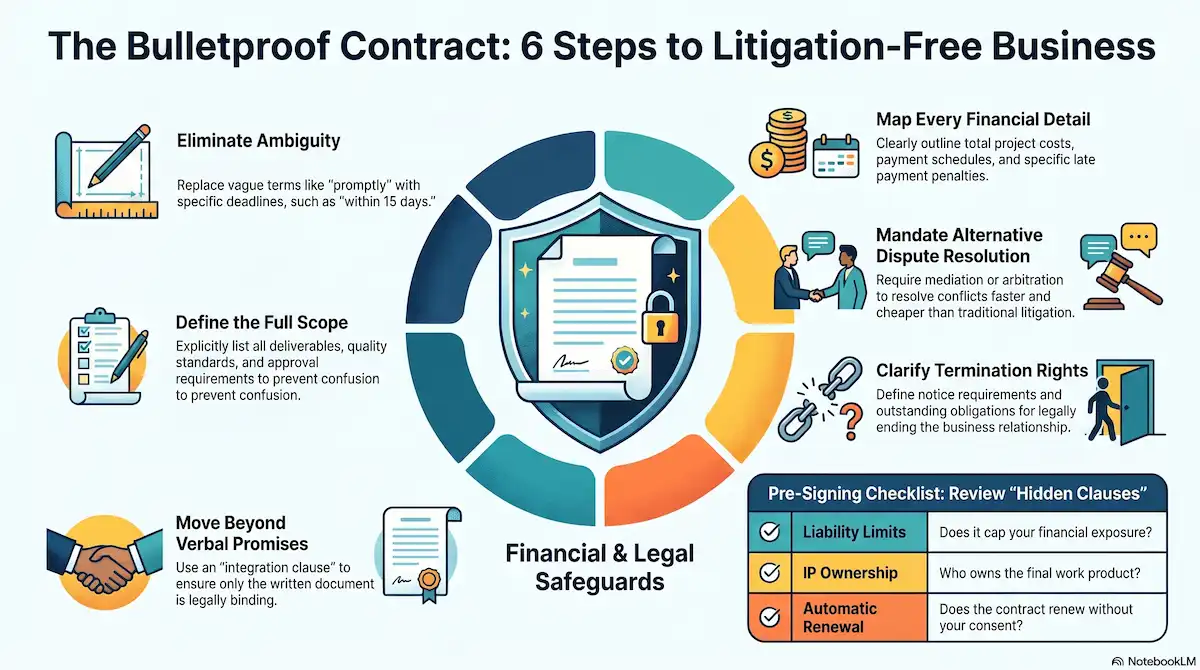
One of the biggest causes of contract disputes is ambiguous wording. If contract terms can be interpreted in multiple ways, disagreements become much more likely.
Avoid using vague expressions such as “reasonable effort,” “as needed,” or “promptly” unless those terms are clearly defined within the agreement. Instead, specify exact responsibilities, deadlines, quantities, and performance standards.
For example, rather than stating that payment will be made “soon after delivery,” specify that payment is due within 15 or 30 days after receiving the invoice.
Clear language reduces misunderstandings and provides stronger legal protection if disputes arise.
Clearly Define Every Party’s Responsibilities
Every contract should identify exactly what each party is expected to do. Many lawsuits occur because one party believes certain services or products were included while the other disagrees.
Include details such as:
- Scope of work
- Delivery timelines
- Payment obligations
- Quality standards
- Approval requirements
The more detailed the contract, the less room there is for conflicting interpretations.
Never Rely on Verbal Agreements
Verbal promises often create confusion because they can be difficult to prove later. If important discussions occur during meetings, phone calls, or emails, update the written contract to reflect those agreements.
A written contract should always represent the complete understanding between all parties.
Many businesses also include an integration clause stating that the written agreement replaces all previous verbal discussions or informal promises.
Include Payment Terms in Detail
Payment disputes are among the most common reasons businesses end up in court.
Instead of simply listing a price, explain every financial detail, including:
- Total project cost
- Payment schedule
- Late payment penalties
- Accepted payment methods
- Refund conditions
Clear payment provisions reduce financial misunderstandings and encourage timely payments.
Define Deadlines and Performance Expectations
Missing deadlines frequently leads to contract disputes. Every important milestone should have a specific completion date whenever possible.
If delays may occur due to circumstances outside either party’s control, include provisions explaining how those situations will be handled.
Setting realistic deadlines helps maintain accountability while reducing unnecessary conflict.
Include a Dispute Resolution Clause
Not every disagreement needs to become a lawsuit.
Many contracts include dispute resolution procedures such as negotiation, mediation, or arbitration before legal action is taken. These alternatives often resolve disputes faster and at a lower cost than traditional litigation.
You should also specify which state’s or country’s laws govern the agreement if multiple jurisdictions could apply.
The American Bar Association provides helpful guidance on contracts and dispute resolution at https://www.americanbar.org/.
Review Every Clause Before Signing
Many people sign contracts without reading every provision carefully. Unfortunately, hidden obligations, automatic renewals, or unfavorable termination clauses often go unnoticed until problems arise.
Pay special attention to sections covering:
- Contract termination
- Liability limitations
- Confidentiality
- Intellectual property ownership
- Indemnification
- Renewal provisions
If any clause seems confusing, ask questions before signing rather than assuming it will not become important later.
Keep Contract Templates Updated
Businesses often reuse contract templates for years without reviewing them. Laws change, regulations evolve, and business practices improve over time.
Regularly updating your contract templates helps ensure they remain legally compliant and reflect your current business operations.
Review contracts periodically with qualified legal professionals to identify outdated language or missing protections.
Document Every Change in Writing
Business relationships evolve, and contracts often need revisions. However, informal changes made through phone conversations or text messages can create confusion later.
Whenever contract terms change, prepare a written amendment signed by every party involved.
Proper documentation creates a reliable record and prevents disagreements about what was actually agreed upon.
Understand Termination Rights
Every contract should explain how either party can legally end the agreement.
Termination clauses should address:
- Notice requirements
- Grounds for termination
- Outstanding payment obligations
- Return of property
- Confidentiality after termination
Clearly defining these procedures helps prevent unnecessary legal disputes when business relationships come to an end.
Protect Confidential Information
Many contracts involve sensitive business information, customer data, pricing strategies, or proprietary processes.
A confidentiality clause helps prevent unauthorized disclosure of valuable information and establishes legal remedies if confidential materials are improperly shared.
Businesses handling customer information should also understand applicable privacy regulations. Helpful guidance can be found through the Federal Trade Commission at https://www.ftc.gov/business-guidance.
Make Sure the Contract Is Legally Enforceable
Even a detailed contract may not be enforceable if legal requirements are not met.
Depending on your jurisdiction, enforceability may require:
- Mutual agreement
- Legal capacity of all parties
- Lawful purpose
- Adequate consideration
- Proper signatures
Electronic signatures are widely accepted in many countries, but businesses should confirm that their signing process complies with applicable laws.
Seek Professional Legal Review
While online templates can provide a starting point, they may not address the unique risks associated with your business or industry.
Having an experienced attorney review important contracts before signing can identify hidden risks, clarify unclear language, and strengthen legal protections.
The cost of preventive legal advice is often significantly lower than the expense of defending a contract lawsuit.
Protect Your Business with Strong Contracts
Avoiding common contract mistakes that lead to lawsuits starts with careful planning and attention to detail. Every agreement should clearly define expectations, responsibilities, payment terms, deadlines, and procedures for resolving disputes. Taking the time to review contracts thoroughly before signing can help prevent costly misunderstandings and strengthen business relationships.
While no contract can eliminate every legal risk, a well-drafted agreement provides a solid foundation for protecting your interests. When contracts are clear, complete, and legally enforceable, businesses are better equipped to handle challenges and avoid unnecessary litigation. For complex agreements or high-value transactions, consulting a qualified legal professional is a smart investment that can help safeguard your business for years to come.