Contesting a will is a serious legal step that arises when someone believes a decedent’s last will and testament does not reflect their true intentions or was executed improperly. For executors, beneficiaries, and family members alike, understanding the grounds for challenging a will is essential before taking action in probate court. This article explains the most common legal bases for a will contest, how courts evaluate evidence, and what you should know before pursuing or defending against a challenge. Probate law varies by state, but most jurisdictions recognize similar legal standards when determining whether a will is valid. Having clear evidence and experienced legal guidance can make a significant difference in these often emotional and high-stakes disputes.
What Does It Mean to Challenge a Will?
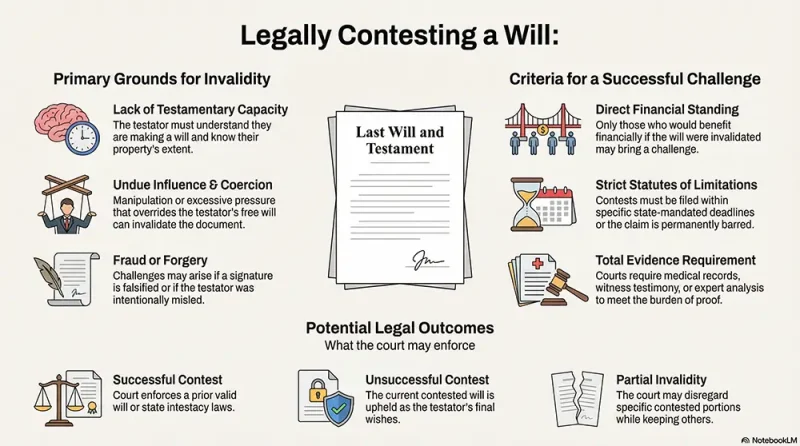
When someone challenges a will, they are asking the probate court to declare the document invalid, either entirely or in part. If successful, the court may disregard the contested will and instead enforce a prior valid will or apply state intestacy laws if no valid will exists. A will contest is not simply about disagreement or disappointment over inheritance. It must be based on legally recognized grounds that demonstrate a defect in how the will was created, executed, or influenced. Courts take these matters seriously because a valid will represents a person’s final wishes regarding their property and loved ones.
Common Legal Grounds for Challenging a Will
Although the exact rules differ by state, probate courts generally recognize several primary grounds for challenging a will.
Lack of Testamentary Capacity
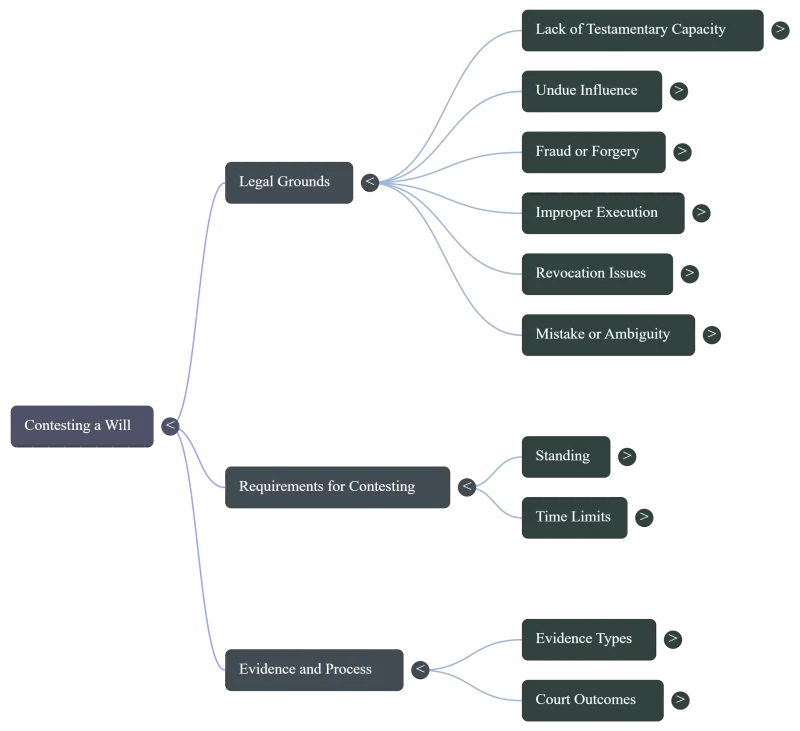
One of the most common reasons to contest a will is lack of testamentary capacity. To create a valid will, a person must understand that they are making a will, know the nature and extent of their property, recognize the natural objects of their bounty such as close family members, and comprehend how the will distributes their assets. If the testator suffered from advanced dementia, severe mental illness, or was under the influence of medication or substances that impaired judgment at the time of signing, a court may determine they lacked the required mental capacity. Medical records, testimony from treating physicians, and statements from witnesses present at the signing are often critical pieces of evidence.
Undue Influence
Undue influence occurs when another person exerts excessive pressure or manipulation over the testator, effectively overriding their free will. While persuasion alone is not illegal, coercion that results in a will reflecting someone else’s desires rather than the testator’s can invalidate the document. Warning signs may include sudden and dramatic changes to a longstanding estate plan, isolation of the testator from family members, or involvement of a beneficiary in procuring or drafting the will. Courts carefully evaluate the relationship between the testator and the alleged influencer, especially when there is a confidential or fiduciary relationship involved.
Fraud or Forgery
A will may be invalid if it was procured through fraud or if the signature is forged. Fraud can occur when someone intentionally misrepresents facts to the testator to induce them to sign a will under false pretenses. Forgery involves falsifying the testator’s signature or altering the document after it was executed. These claims typically require strong evidence, including handwriting analysis or forensic examination.
Improper Execution
Every state has statutory requirements for executing a valid will. These requirements generally include that the will must be in writing, signed by the testator, and witnessed by a specified number of competent individuals. Failure to comply with these formalities can render a will invalid. Official probate law resources, such as the Legal Information Institute at Cornell Law School, provide accessible explanations of probate requirements and terminology at https://www.law.cornell.edu/wex/probate. If the execution ceremony did not meet statutory standards, the will may be successfully challenged.
Revocation Issues
A will can be revoked by executing a new will or by physically destroying the existing one with the intent to revoke it. Complications arise when there are disputes about whether a newer will exists or whether destruction was intentional. Marriage, divorce, or other life events can also impact certain provisions depending on state law. Disputes over revocation often require careful analysis of timing and intent.
Mistake or Ambiguity
Ambiguous or contradictory language in a will can create disputes about the testator’s intent. While courts strive to honor the decedent’s wishes, they cannot enforce unclear or impossible provisions. In limited situations, a court may reform the language if clear evidence shows a drafting mistake. However, proving such claims is difficult and fact-specific.

Who Has the Right to Challenge a Will?
Not everyone may contest a will. Generally, only individuals with a direct financial interest in the estate have standing to bring a challenge. This typically includes disinherited heirs, named beneficiaries, or individuals who would inherit under a prior will or through intestate succession. Courts require that the person bringing the contest demonstrate that they would benefit financially if the will were invalidated.
Time Limits for Filing a Will Contest
Will contests are subject to strict deadlines. Each state sets a statute of limitations that governs how long an interested party has to challenge a will after probate proceedings begin. Missing this deadline may permanently bar a claim. Probate courts publish procedural information through official government resources such as the United States Courts website at https://www.uscourts.gov/services-forms/probate, and state court systems provide similar guidance. Because deadlines vary, prompt legal advice is essential.
Evidence Required to Support a Will Challenge
A successful will contest depends on presenting credible and persuasive evidence. This may include medical records demonstrating incapacity, testimony from witnesses who observed coercion, prior versions of estate planning documents, financial records revealing suspicious changes, or expert analysis regarding handwriting or mental health. Courts weigh the totality of circumstances when determining whether the legal burden of proof has been met.
Speak With an Experienced Probate Attorney About Challenging a Will
If you believe a loved one’s will does not reflect their true intentions or was created under improper circumstances, you should seek legal guidance as soon as possible. Grounds for challenging a will must be supported by clear evidence and filed within strict time limits. An experienced probate attorney can evaluate your situation, explain your rights, and help you determine the most effective course of action. Taking early, informed steps can protect your interests and ensure the decedent’s true wishes are honored.