
Owning a business requires years of hard work, financial investment, and careful planning. For business owners in Corpus Christi and throughout South Texas, protecting that investment means preparing for unexpected changes, including retirement, disability, death, or a partner’s decision to leave the company. A buy-sell agreement can help business owners manage these situations while protecting their families, business partners, and the future of the company.
Whether you operate a family-owned business in Corpus Christi, a construction company serving the Coastal Bend, or a professional practice with multiple owners, a clear succession plan can make a significant difference. Understanding how a buy-sell agreement works is an important step toward maintaining business stability and avoiding unnecessary disputes.

What Is a Buy-Sell Agreement?
A buy-sell agreement is a legally binding arrangement that establishes how an owner’s share of a business may or must be transferred when certain events occur. Depending on its terms, the agreement may apply when an owner dies, becomes disabled, retires, divorces, or decides to sell their ownership interest.
The agreement generally identifies who can purchase the departing owner’s share, how the business will be valued, and how the transaction will be funded. It can also establish deadlines and procedures to help ensure that ownership changes happen in an orderly manner.
For example, imagine two business partners operating a construction company in Corpus Christi. If one partner unexpectedly passes away, their ownership interest could become part of their estate. Without a clear agreement, the surviving partner and the deceased owner’s family might disagree about the company’s value, the timing of a sale, or whether the family should become involved in business decisions.
A properly drafted buy-sell agreement can establish a process for addressing these issues before a crisis occurs.
Why Buy-Sell Agreements Matter for South Texas Business Owners
South Texas has a diverse business community that includes construction contractors, agricultural enterprises, medical practices, professional services, hospitality businesses, and companies supporting the region’s energy and maritime industries. Many of these businesses depend on a small group of owners whose experience, relationships, and financial contributions are essential to daily operations.
When an owner suddenly leaves, the business may face more than an ownership change. It could lose an important decision-maker, encounter cash flow challenges, or struggle to maintain relationships with customers and suppliers.
Local businesses may also need to consider regional economic pressures, seasonal revenue changes, severe weather disruptions, and the practical challenges of continuing operations during an unexpected transition. A buy-sell agreement cannot prevent every business problem, but it can clarify what happens to ownership when circumstances change.
For family-owned companies, the agreement can be particularly important. It helps separate the family’s financial interests from the operational needs of the business, reducing the risk that disagreements will disrupt an otherwise successful company.
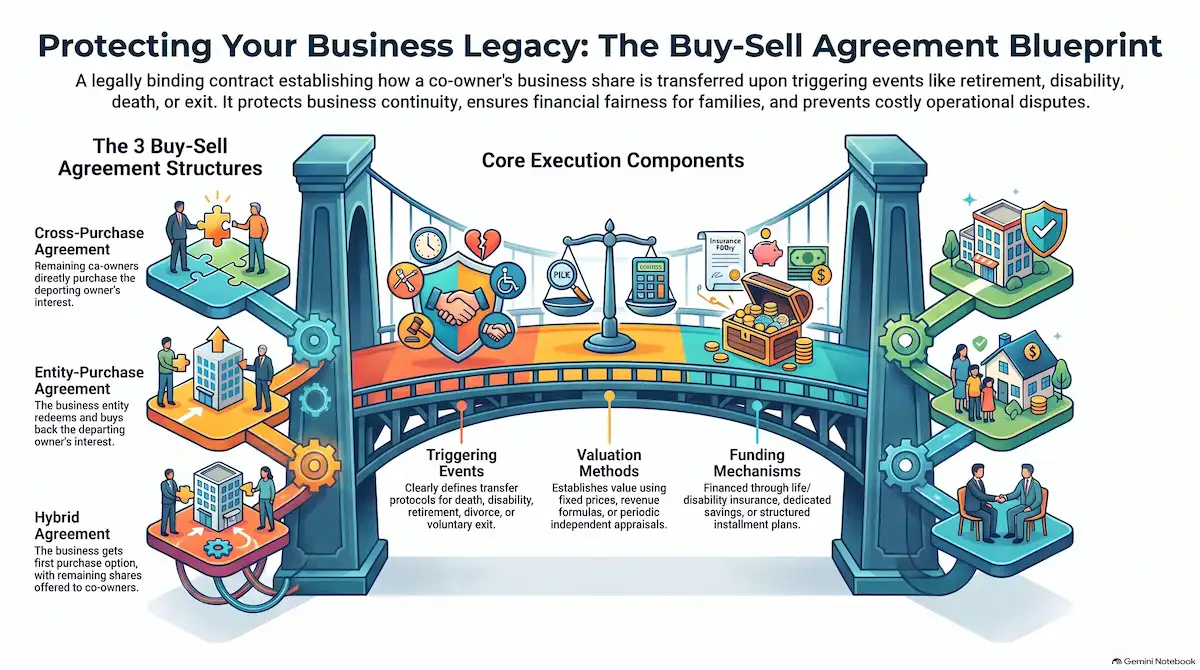
How a Buy-Sell Agreement Protects Business Owners and Their Families
One of the main benefits of a buy-sell agreement is that it creates a plan for both the remaining owners and the family of a departing owner.
When an owner dies, surviving family members may inherit an ownership interest depending on the business structure, estate plan, and applicable law. However, inheriting an interest does not necessarily mean that family members have the experience or desire to participate in daily management.
A buy-sell agreement can provide a mechanism for the remaining owners or the business itself to purchase that interest under agreed-upon conditions. The family may receive financial compensation, while the remaining owners can preserve greater continuity in business operations.
The agreement can also protect owners who want to leave voluntarily. Instead of negotiating from scratch during a stressful transition, the parties can follow procedures established in advance.
For example, a family-owned service company in the Coastal Bend might establish a purchase process that allows a retiring owner to receive payment for their interest while younger family members or remaining partners continue running the company. The exact outcome depends on the agreement’s terms and the business’s legal structure.
Common Types of Buy-Sell Agreements
The appropriate arrangement depends on the number of owners, the company’s structure, available financing, and the owners’ long-term goals.
A cross-purchase agreement allows the remaining owners to purchase the departing owner’s interest. This arrangement can work well for businesses with a small number of owners who want direct control over who becomes a co-owner.
An entity-purchase agreement, sometimes called a redemption agreement, allows the business entity to buy back the departing owner’s interest. The company must be able to fund the purchase and comply with applicable legal and financial requirements.
A hybrid agreement combines elements of both approaches. It may give the company the first opportunity to purchase an interest and allow the remaining owners to purchase any portion that the company does not buy, subject to the agreement’s terms.
Each approach has different legal, tax, and funding implications. Business owners should work with qualified legal and tax professionals to determine which structure best fits their circumstances.
How Is a Business Valued in a Buy-Sell Agreement?
Valuation is one of the most important parts of a buy-sell agreement because disagreements about the business’s worth can delay a transfer and create conflict.
Some agreements establish a fixed purchase price that the owners review regularly. Others use a valuation formula based on revenue, earnings, assets, or another financial measure. A third option is to require an independent business appraisal when a triggering event occurs.
For a Corpus Christi business, valuation may involve more than reviewing annual revenue. A contractor may have equipment, outstanding contracts, and customer relationships to consider. A professional practice may depend heavily on recurring clients and the expertise of its owners. A family business may also have real estate or other assets that require separate consideration.
The agreement should explain how valuation works, when the price is reviewed, how disputes are resolved, and whether discounts or other adjustments apply. Regular reviews are important because a purchase price established years earlier may no longer reflect the company’s current value.
Business owners should also consider whether the valuation method will remain practical as the company grows, acquires assets, or changes its ownership structure.
Funding the Buyout: Life Insurance and Other Options
Even when everyone agrees on the purchase price, the transaction can fail if the buyer does not have enough money to complete it. Funding should therefore be considered when the agreement is drafted, rather than after an unexpected event.
Life insurance is a common funding option when an owner’s death triggers a purchase. Depending on the arrangement, the business or the other owners may hold policies intended to provide money for buying the deceased owner’s interest.
Disability insurance, business savings, installment payments, and commercial financing may also be considered. Some agreements allow the purchase price to be paid over time, which can reduce the immediate cash burden on the buyer while providing the departing owner’s family with a defined payment arrangement.
For small businesses in South Texas, choosing a realistic funding strategy is especially important when cash flow varies or substantial money is tied up in equipment, inventory, property, or ongoing projects.
Insurance availability, policy ownership, tax treatment, and coverage amounts should be reviewed with qualified professionals. A funding plan should be updated as the business’s value and financial needs change.

Coordinating a Buy-Sell Agreement With an Estate Plan
A buy-sell agreement should not be created in isolation. It should work alongside the owner’s will, trust arrangements when appropriate, business governing documents, and other estate-planning measures.
If these documents conflict, the owners and their families may face uncertainty about how an ownership interest should be transferred or who has authority to act. Coordination is particularly important for family businesses in which ownership, inheritance, and management responsibilities may involve different generations.
The Internal Revenue Service provides information about estate and gift tax considerations through its Estate and Gift Taxes resource. Because the tax consequences of transferring business interests depend on the specific facts, owners should seek individualized tax advice rather than assume that a particular agreement will produce a specific tax result.
Business owners can also consult the U.S. Small Business Administration’s guidance on business planning when reviewing how long-term planning supports business continuity.
In Texas, the agreement should be drafted or reviewed by an attorney familiar with the company’s business structure and applicable state law. Owners should not assume that a generic template will adequately address their circumstances.
When Should You Create or Update a Buy-Sell Agreement?
The best time to establish a buy-sell agreement is while the business is operating normally and the owners can discuss their preferences without the pressure of an immediate crisis.
Consider creating or reviewing an agreement when you establish a business partnership, add a new owner, transfer shares to family members, obtain significant financing, or experience substantial business growth.
Major personal changes, including marriage, divorce, retirement planning, or changes in family responsibilities, may also justify a review. An agreement should be revisited whenever the business’s ownership, valuation, insurance coverage, or financial position changes significantly.
Owners should confirm that the agreement identifies triggering events, explains the valuation process, sets realistic purchase timelines, and establishes a workable funding strategy. They should also verify that the company’s governing documents and estate plans remain consistent with the agreement.
Protect Your Business Legacy With a Clear Plan
A buy-sell agreement is more than a document outlining how ownership changes hands. It is a practical tool for protecting business continuity, providing financial clarity for families, and reducing the likelihood of disputes during difficult transitions.
For business owners in Corpus Christi and across South Texas, planning ahead can help preserve years of hard work and give loved ones a clearer understanding of what to expect if an owner can no longer participate in the company.
Working with an experienced business attorney and a qualified tax professional can help you develop an agreement that reflects your ownership structure, financial resources, and long-term goals. By reviewing the agreement regularly and coordinating it with your broader succession and estate plans, you can take meaningful steps toward protecting both your business and the people who depend on it.