
A business partnership is built on trust, shared goals, and a legally binding agreement that defines each partner’s roles and responsibilities. When one partner fails to honor that agreement, the consequences can be serious and far-reaching. It can disrupt operations, create financial instability, damage relationships, and in some cases, lead to the closure of the business. Understanding what happens when a business partner breaks a contract is essential for protecting your rights and responding in the right way.
Understanding a Breach of Business Partnership Contract
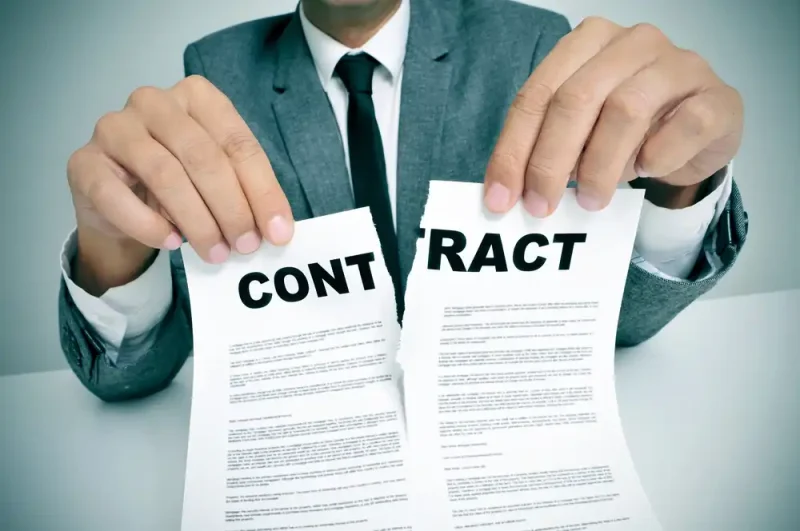
A breach of contract happens when one partner fails to meet the obligations outlined in the partnership agreement. This may include failing to contribute capital, misusing company funds, neglecting assigned duties, or making unauthorized decisions on behalf of the business.
Since partnership agreements are legally binding, any violation can trigger legal consequences depending on the severity of the breach. Some breaches are minor and fixable, while others can completely destroy trust and force the partnership to end.
If you want to understand how agreements are properly structured, you can also read our guide on Business Partnership Agreements
Common Types of Contract Breaches in Business Partnerships
Business partnership breaches can happen in different ways, and identifying the type of breach is important in determining the next steps.
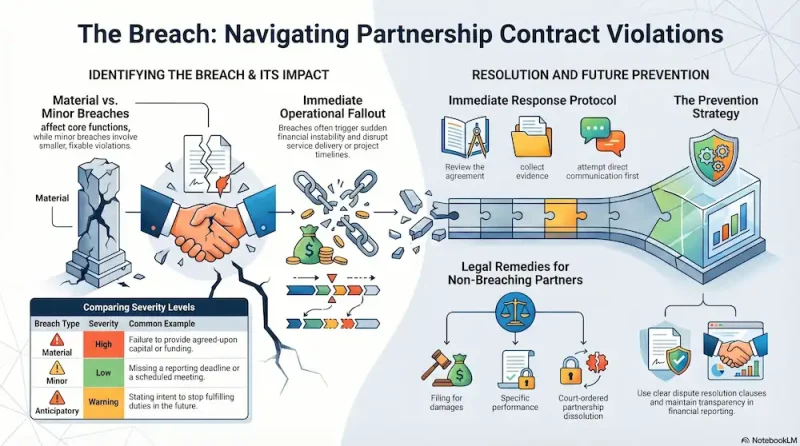
A material breach is the most serious type, where a partner fails to perform a key obligation that affects the business’s ability to function. For example, if one partner stops providing agreed financial support, the entire business may suffer.
A minor breach involves smaller violations that do not completely damage the agreement but still create problems, such as missed reporting deadlines or failure to attend scheduled meetings.
An anticipatory breach occurs when a partner clearly indicates they will not fulfill their obligations in the future, giving the other party time to prepare and respond.
Immediate Effects When a Business Partner Breaks the Contract
When a breach occurs, the impact is often immediate. One of the first effects is financial instability, especially if the partner was responsible for funding or managing income streams.
Business operations may also become disrupted if responsibilities are not clearly reassigned. This can slow down productivity, delay projects, and affect service delivery.
Customer confidence may also decline if the breach becomes visible externally, leading to reputational harm. Internally, remaining partners may experience tension, confusion, or disagreements about how to move forward.
Legal Consequences of Breaching a Partnership Contract
A breached partnership agreement can lead to several legal outcomes depending on the situation. The non-breaching partner may file a claim for damages to recover financial losses caused by the violation.
Courts may also order specific performance, requiring the partner to fulfill their contractual obligations, although this is less common in partnership disputes due to the breakdown of trust.
In more severe cases, the court may order contract termination, leading to dissolution of the partnership and division of assets.
If fraud or illegal activity is involved, additional legal penalties or criminal charges may apply depending on local laws.
For more details on legal remedies, you can explore our guide on Contract Breach Remedies and Legal Options
What You Should Do Immediately After a Breach
Taking the right steps quickly can help reduce damage and protect your interests. Start by reviewing the partnership agreement carefully to confirm whether a breach has occurred and identify which clauses were violated.
Next, collect all supporting evidence such as emails, financial records, contracts, and communication logs. This documentation will be important if legal action becomes necessary.
Whenever possible, try to communicate directly with the partner to clarify the situation. Some disputes are caused by misunderstandings and can be resolved without escalation.
If direct communication fails, it is important to seek legal advice from a business law professional who can guide you on the best course of action. You can also review general partnership guidance from the U.S. Small Business Administration at SBA Partnership Resources.

Can a Business Survive After a Contract Breach?
A business can survive a contract breach, but its success depends on the severity of the situation and how quickly it is managed. In less severe cases, the business may recover through restructuring roles, replacing responsibilities, or renegotiating terms.
However, if the breach affects critical areas such as financing, leadership, or ownership control, recovery becomes much more difficult.
Businesses that act quickly and seek professional advice often have a better chance of stabilizing and continuing operations.
How to Prevent Future Partnership Breakdowns
Preventing disputes starts with a strong and detailed partnership agreement. The contract should clearly define roles, financial contributions, decision-making authority, and procedures for resolving disagreements.
Regular communication between partners is also essential to prevent misunderstandings from turning into major disputes.
Including dispute resolution clauses such as mediation or arbitration can help resolve issues more efficiently without going to court.
It is also helpful to maintain transparency in financial reporting and business decisions to build trust and accountability.
For more insights, you can read our guide on how to protect your business partnership.
Moving Forward After a Partnership Dispute
After a business partner breaks a contract, the path forward depends on how the situation is handled and the willingness of both parties to resolve the issue. Some businesses are able to rebuild trust and continue operating with revised agreements, while others may need to restructure or dissolve entirely to protect remaining interests.
Careful assessment of financial stability, legal exposure, and long-term goals is essential before deciding the next step. With proper guidance and timely action, it is possible to minimize losses and regain control of the business direction.